Every great product with rapid scaling potential, like Instagram and Airbnb, started its journey by testing ideas with MVP development. Despite its numerous advantages, a notable number of startups fail to develop efficient MVPs due to strategic mistakes rather than a lack of ideas.
Some of the most common errors include insufficient market research, unclear value propositions, and even monetizing the prices without proper planning. Some companies skip prototyping, overload unnecessary features, and often struggle to balance speed and quality. This can lead to wasted resources, missed deadlines, and a higher risk of the MVP failing to achieve product-market fit.

1. Insufficient Market Research and Misaligned Validation
The big mistake is right there when you are missing market research and increasing the risk of developing features that your actual user base does not want or need. As the core of the issue, your MVP might launch but fail to gain traction, leading to a notable waste of time and capital. Even surprisingly, up to 42% of startups fail just due to a lack of understanding of the market need for their product. Juicero stood out as that classic example of a startup failure, where it raised $120 million but failed as its product didn’t solve a real or urgent customer problem. To solve the issue, invest time in market research. Utilize surveys, focus on groups, and analyze the competitors. Plus, ensure to validate your MVP with real users early and collect feedback to refine strategies.
2. Unclear Value Proposition and Lack of Success Metrics
It is one of the major barriers when your users don’t understand how the product will benefit them and leave it without even understanding the features. This way, your MVP itself increases the risks of becoming just another app or service in an overcrowded market. Other reasons? An unclear value proposition or a lack of defined success metrics. The consequence hits hard! Users start losing trust, and your product rarely gets product-market fit. It slows your business growth drastically. To avoid the issue, articulate your value proposition early. Make sure they are simple and customer-centric. Moreover, set key performance indicators (KPIs) from the outset to get a clear direction and save your MVP from falling flat.
3. Weak Monetization Strategy in the MVP Stage
You limit the MVP’s success in case you are solely focusing on product development without even realizing how it will generate revenue. Without a clear monetization strategy from the beginning, you may face critical financial challenges.
According to CB Insights, up to 38% of startups fail to move ahead as they run out of cash flow or fail to raise new capital. As the great dealbreaker, you can offer a free plan with paid upgrades for your product. It will validate customer willingness to pay while you build a strong user base. Besides, plan for different revenue models early, such as subscription services, freemium models, or ads, according to the target audience. Ensure to test payment options early, and adjust based on real user behavior.
4. Feature Creep and Over-Complexity
Have you heard of the infamous launch of Microsoft Vista? It was launched with the slogan “bring clarity to your world,” but users found it so complicated that they even failed to run the Vista Beta on their hardware. That’s the mistake most startups make – feature creep. Many providers are just burdening their customers with too many features without a clear understanding of their necessity. It leads to an overly complex product that deviates from the original vision.
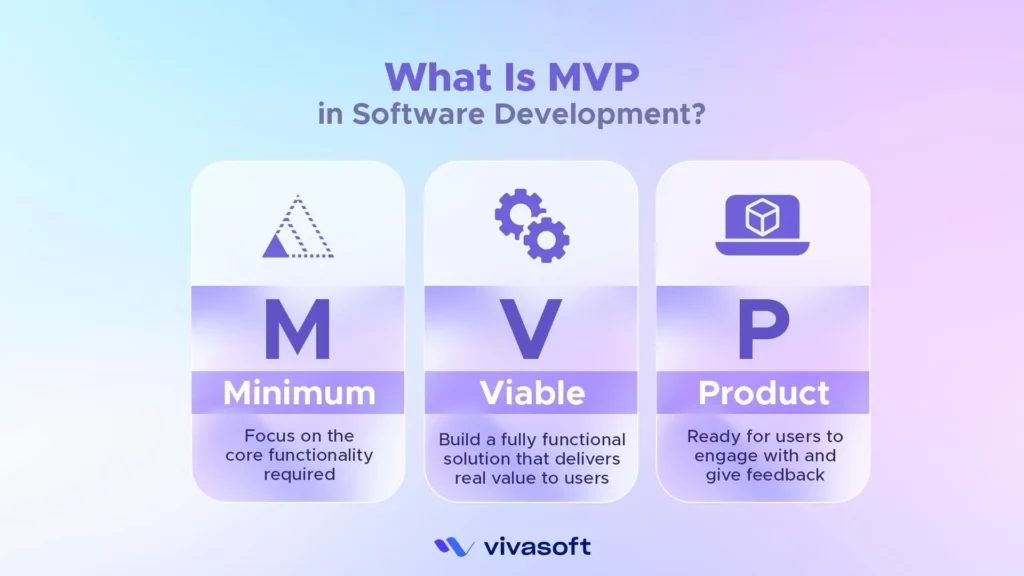
The consequences are too obvious. You face delayed timelines and, surprisingly, increased development costs. To solve the issue, focus on must-have features that solve the users’ core problem. Add the minimum set of functionalities so you can test your product’s viability and collect feedback.
5. Skipping Rapid Prototyping and Jumping to Code
Prototyping is the major process that helps you make interactive models of your product to test ideas and validate functionality before development begins. If you skip this major step and just directly head to coding, you are missing crucial design flaws. Chances are, you are developing features users do not want. They may face usability problems too late to fix easily. To avoid this issue, use wireframes and mockups early in the development process. For this, utilize some go-on tools such as Figma or Adobe XD and test overall ideas without even writing a single line of code. Additionally, conduct usability testing sessions with real users and collect feedback through surveys or interviews.
6. Struggling to Balance Speed vs. Quality
In MVP development, balancing speed and quality is a perennial challenge. You should focus on the earlier deployment of your MVP before your competitors claim market share.
But also, if you are rushing without quality checks, you risk releases with bugs, poor user experience, and weak reliability. This just damages your brand reputation and deters users. To keep the actual balance, utilize iterative improvement frameworks, such as Agile sprints to iterate quickly, test, and continuously improve the strategies. Combine this with quality gates using checkpoints like code reviews, automated tests, or design approvals to ensure each feature meets ultimate quality.
7. Neglecting Security and Scalability in Early Builds
Cyberattacks can be devastating for small businesses, and even a single data breach can lead to financial losses. Many startups, eager to launch quickly, neglect all such critical security factors during MVP development. It just leaves your products vulnerable. Scalability issues are another core challenge for the MVP development process. Without scalability, your product may crash as your user base grows. You can take a quick example of MySpace, which was once the leading social media platform and reached millions of users. With the user demand, it couldn’t efficiently handle rapid growth and became slow, buggy, and unstable. To prevent the issue, implement basic security measures like encryption or secure authentication from the start. Also, plan for a scalable architecture to manage the effects of user growth.
8. Building with a Weak or Misaligned Development Team
A weak or misaligned development team can derail your MVP from the start. Many founders just go with the developers based on availability and lower cost. Thus, they increase their risk for buggy releases, missed deadlines, and wasted budgets. Many startups outsource without vetting quality. They also struggle with rework and product delays, costing months and tens of thousands in extra spend. Even with an expert developer team, your project can still go off track if there isn’t a dedicated product owner or someone who defines clear priorities. All in all, you need a team experienced in MVPs and agile methods. The team should follow a clear product roadmap and a well-prioritized backlog to keep your project focused.
9. Ignoring or Overreacting to Customer Feedback
Research reveals that for every customer who complains, 26 leave without a word. So you can understand, when you are ignoring just that one complaint, you risk losing many more silently.
Without analyzing the feedback deeply, you can’t even identify the critical flaws in your MVP and move your product to the final deployment. Conversely, many startups take action for every comment, which is equally dangerous. When you make constant and drastic changes, you are derailing your roadmap and introducing feature creep, leading to confusion for the users. To balance this, categorize feedback by frequency and impact. The best approach is to focus on recurring pain points without constantly overhauling your MVP.
10. Poor Project Management and Accountability
Due to poor project handling, your MVP development will just stop before it reaches users. Even as a newbie, most experienced teams go with an unclear plan, timelines, and accountability. For this, development stalls and resources are wasted. The consequences are even severe. Investors lose confidence, and the product quality drops, which is alarming. The best practices are defining clear goals first and setting realistic timelines. To have strong team management, ensure that to establish communication channels, track progress, and resolve blockers swiftly. Utilize project management tools such as Jira or Trello and hold regular stand-ups.
11. Failing to Transition Beyond MVP Stage
You launch your MVP and feel the rush of early success. Even though they bring excitement and capture attention, you get stuck, and that is a red flag. One of the big mistakes is treating the MVP like the final product. MVPs are mainly designed to test a hypothesis and are lean and limited. To grow with this, you must rethink product design and go-to-market strategies. Also, the skills and systems that got you traction might not be scalable as user demands and competition increase. You will want a clear roadmap beyond MVP that focuses on deepening product-market fit.
12. Budget Burn and Resource Mismanagement
Overbudgeting or failure to manage the resources properly are frequent traps that can sink your MVP before it gains traction. Many issues waste a lot due to adding unnecessary features or rushing without validating product-market fit. It just inflates costs and drains cash reserves fast. And when your budget burns too quickly, you may face hard choices like cutting features, stopping hiring, or halting operations altogether. To avoid this, track your expenses and set a clear scope at every stage. The best you can do is utilize an MVP calculator and forecast your MVP development costs accurately.
How Long Should MVP Development Take?
Typically, you can set timelines of about 4–6 months for complete MVP development. But your goal will be to launch quickly and test your product with real users. Within this timeframe, you have to focus on essential features that validate your core idea quickly. In case you develop a simple MVP with just initial features, you can expect to complete it within 1 to 3 months. More advanced MVPs requiring complex features or integrations may extend the time, often over 6 months as well. The timelines for building an MVP may vary depending on the development approach and technologies used.
How to Scale After MVP?
After your MVP proves the concept, it’s time to scale with careful planning and strategy. All you need to do is start by analyzing user feedback and engagement data and identifying features that will bring real value. Next, optimize your infrastructure and ensure it can handle increased traffic. Utilize scalable cloud solutions to improve scalability and automate the process using advanced project management tools. When you have finalized your MVP, strong advice is to hire dedicated developers and build the next phase. Skilled developers bring the technical depth and speed needed to scale your product reliably.
How Does Vivasoft Turn MVP Challenges Into Wins?
If you are struggling to launch an MVP on time and want to stay within budget, Vivasoft can turn those challenges into wins. We have a dedicated MVP development team – experienced across 100+ technologies, including Python, React, Flutter, Laravel, and cloud platforms like AWS and Azure. Our skilled team finds gaps in market research, ensures validation, and optimizes features using agile sprints and iterative development methods. We ensure security, scalability, and the needed monetization strategies are integrated from day one. So if you want a team ready to deploy polished, user-focused MVPs that minimize risk and save your resources, contact us today for an initial consultation. Accelerating your startup’s growth is just a call away.