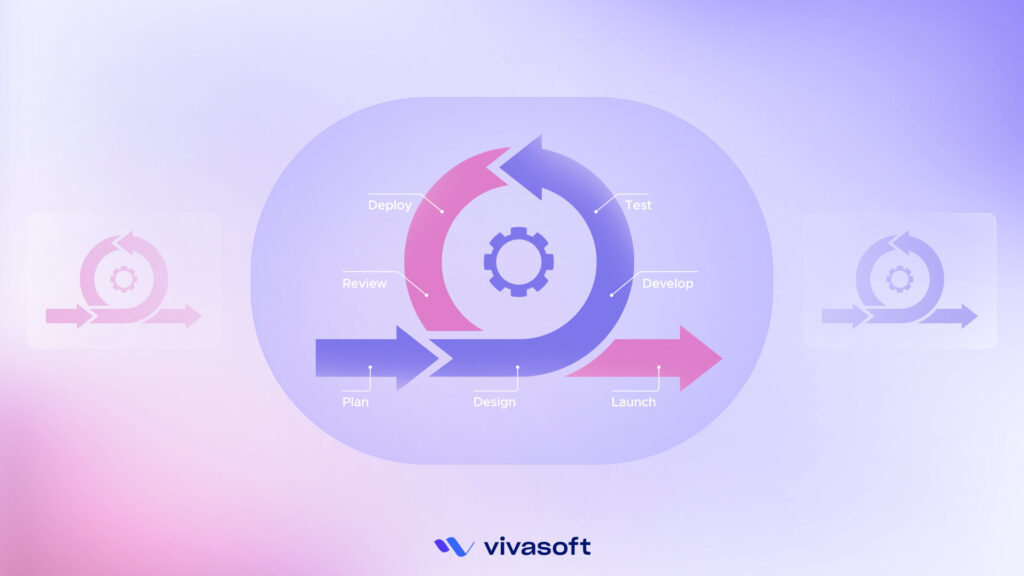
Agile project management has introduced a new way in software development through its flexible and dynamic approaches that highly focus on adaptation and customer value. It is far different from all the traditional methods, such as the Waterfall model or Critical Path Method (CPM), where sequential processes are applied.
Agile delivers work in small and iterative cycles. The motive is to complete the project through continuous customer feedback and improvements. Let’s make the concepts clearer and learn how this efficient approach is now well-suited for modern software development.
What is Agile Project Management?
Agile project management is the iterative approach that is designed to deliver the project throughout its development life cycle. One of the main goals of applying the Agile project management process in software development is to check the project benefits across the stages rather than only at the end. It helps the team to visually assess their work, adjust the process, and incorporate customer expectations to ensure the best possible outcomes.
Software teams can also benefit from higher development speed, active collaboration among members, and fast project delivery according to market trends. Agile methodologies are now widely used. A study reports that over 94% of software companies are using Agile development methodology.
Core Agile Methodologies for Software Development
Some of the commonly used Agile methods for software development include Scrum, Kanban, Extreme Programming, Lean Software Development, and so on. Have a detailed overview of how each one works in the project development.

Scrum
This most effective project management framework helps teams to self-organize and actively work towards a common goal. The scrum team requires three specific roles:
- Product owner
- Scrum master
- Development team
The product owner will ensure that the development team provides the best value for the business. The scrum master leads the team as a coach. And the development team works collaboratively to ensure an efficient sprint completion. The complete management team manages the Scrum ceremonies. This starts with sprint planning and daily standups. Also, it includes sprint review and sprint retrospective.
Kanban
Kanban is a continuous workflow management system that utilizes visual task boards to track progress. Software teams can easily automate their process through it. For instance, they mostly focus on limiting work-in-progress (WIP).
It effectively reduces bottlenecks, increases efficiency. Plus, the team can ensure that tasks are completed before new ones are started. With this agile methodology, teams can easily visualize task statuses and manage their workloads based on priorities. Plus, through workflow automation, Kanban helps teams to deliver software faster and more actively.
Extreme Programming
This extreme programming methodology is specially designed to improve the software quality and responsiveness to changing customer requirements through frequent iterations. It uses some special practices to improve the overall performance. The overall process includes Pair Programming and Continuous Integration.
Plus, through Test-Driven Development or TDD, developers write tests before writing the code, whereas pair programming practices involve two developers working together at a single workstation. Finally, with continuous integration, codes are integrated multiple times into the main database. This is to prevent any integration issues.
Lean Software Development
This agile framework is designed to optimize the software development process. The main goals of it are to ensure the best quality of the software and minimize any potential sources of defects.
Also, it highly works on improving the overall experience with the software and adding value as much as possible. With this agile process in the development, development teams can even reduce cycle time and deliver the software quickly than ever. In case any issues arise, the lean principle helps teams to break them into small constituent parts and optimize the workflow.
Benefits of Agile Project Management in Software Development
- Faster Delivery: Agile methodologies help teams divide a large and complex project into a few manageable iterations that are known as Sprints. At the end of the session, the team finds all new working pieces of software from which they get small updates frequently. Through this practice, the developer team automatically builds, tests, and launches updates. This makes product releases faster.
- Customer-Centric: Agile approaches prioritize customer satisfaction first. Through regular check-ins, the development team can collect customer feedback throughout the development process and understand their needs. Based on the collected datasets, they can adjust strategies and make necessary improvements to truly meet customer expectations.
- Improved Flexibility and Adaptability: Agile planning is dynamic. Here, teams have the flexibility to adjust their plan and strategy according to the customer’s needs. They can regularly review processes, collect feedback from each Sprint, and take proactive actions right away. This flexibility ensures the final product is efficient enough and brings long-term success.
- Enhanced Collaboration: Agile approaches offer open and transparent communication among the team members through specialized practices such as daily stand-up meetings. Here, everyone involved can share their ideas, roadblocks, and adjust planning to ensure the best outcome.
- Higher Quality: With constant feedback collection through automated testing and taking action accordingly, developers can easily meet the high-quality criteria for their products. It will be an ongoing process that continues throughout the Sprint, and where there will be fewer errors. As a result, the final product will be more enhanced and reliable for the users.
How Does Agile Project Management Work in Software Development?
Here are the complete details on how the software development team optimizes their workflows following the agile project management approaches:
- Key Roles: First, you need to ensure an active agile team with all the key roles. This includes a Product Owner, a Scrum Master with an active Development Team. The product owner will follow up on the customer’s needs with the team and manage the product backlog. The developers, testers, and designers will work collaboratively and ensure all the essential features. Among them, the scrum master will work as a facilitator who will guide the team.
- Iterative Development: When you have an extremely large software project that is challenging to deal with, the Agile process helps by dividing it into a few quick advancement phases. Teams can work independently with each short, time-boxed iteration.
- Backlog Management: Agile teams manage a dynamic product backlog. It is basically an ongoing process where teams make a feature list that will mostly be a priority for their projects. Teams go through a regular revision and updating of the backlog to make it always relevant to the process. The best part? There will be full flexibility to add new features, update existing ones, or fix any arising bugs.
- Agile Ceremonies: Agile teams always plan the work for an upcoming sprint based on backlog priorities. For instance, the team sets a Sprint Goal to keep everyone’s focus. By that time, the team may come together for meetings to discuss progress, challenges, and find areas for improvement.
Implementing Agile Project Management in Your Software Development Process
To have a successful software development process through Agile methodologies, you need a clear plan and the right approach. Let’s have a short look at the essential steps on how you can implement Agile throughout your software development project.
Assess Readiness
First off, determine whether your team is ready to take such a big initiative. Your team should be properly prepared for strong collaboration and iterative development. Check and ensure the essential tools you are going to use support Agile workflows. Plus, don’t miss checking your team’s proper skill set to develop well-proven software as the client’s needs.
Choosing the Right Framework
The next step is choosing the right Agile framework for your software development. You can choose any framework, from Scrum and Kanban to XP. All depending on your project’s specific needs. For example, go for the Scrum framework if you are going to deal with complex projects. Kanban is best for projects with continuous workflows.
Building an Agile Team
Your next step should be reinforcing your Agile team from first to last. Check and ensure you have developed a team with all the roles. This may include developers, designers, and testers. They should be ready to take proactive responsibility according to the project’s needs.
Agile Tools and Technologies
To improve the workflows, you must choose the appropriate Agile tools, especially for your software project. For instance, your team members should have the proper knowledge to use various project management tools. They are like Jira, Trello, or Asana to manage backlogs and track progress. Plus, for effective collaboration, you can consider Slack or Microsoft.
Training and Coaching
Your Agile teams require frequent training and coaching sessions to make your project an ultimate success. You can manage workshops, online courses, and help your team understand Agile principles and usage. For better results, you can take guidance from an expert Agile coach or experienced mentor. Studies show that teams with an active Agile coach experience up to a 50% increase in task completion rates.
Best Practices for Agile Project Management in Software Development
To have the ultimate success of your software development through Agile, you need to ensure iterative development, continuous collaboration with a strong focus on delivering customer satisfaction. Let’s get details on how to implement each one:
Focus on Delivering Value
Your core target from Agile management should be ensuring reliable software featuring all the essential tools for the customer as quickly as possible. Even 75% of companies agree that accelerated software delivery is one of the top reasons for them to pick Agile as their main strategy.
The best part is that you can collaborate with the Product Owner to understand customer needs and then implement them perfectly.
Maintain Open Communication
Keep note that Agile project teams thrive on open and transparent communication among all team members. Your team members should be regular in meetings, daily stand-ups, and frequent feedback sessions.
This effective approach prevents misunderstandings and solves rising issues quickly. It is even proven that an open conversation allows teams to ensure up to 4.5 times more successful projects.
Continuously Improve
Through Agile management, you have the chance for continuous improvement through regular retrospectives and feedback loops. It helps teams to find where they went wrong and identify areas for improvement. For this, you can adopt a “Kaizen” mindset that aligns with lean methodology and principles.
Prioritize Backlog Regularly
You should prepare a proper Product Backlog. This will work as a living document, including all the valuable items detailed in one set. Research states that an effective product backlog experiences up to 20% higher productivity.
It also helps to ensure that the tools meet customer needs and market trends. All you need to do is ensure that the backlog is easily accessible to your entire team.
Test Continuously
You need to constantly refine processes and study your methodology. Through proper integration testing, identifying and fixing defects early, you can reduce the cost and need of fixing them later. Above all, you can ensure higher-quality and faster delivery of software products.
Common Challenges in Agile Project Management for Software Development
Despite the growing rise in success rate through automation, Agile project management is not without challenges. The adoption of this practice and models often brings hurdles, especially for the larger enterprises.
The following are the frequently arising issues with agile project management, along with quick solution ideas:
- Resistance to Change: It is not uncommon for Agile teams to get stuck adopting the change method to their planning approach to meet complex requirements. To solve this issue, you can gradually implement changes and measure the progress. Training and workshops for your team members also work well to demonstrate the value of adaptability through Agile implementations and metrics.
- Scope Creep: When your team constantly struggles to deal with uncontrolled growth in a project’s scope at any point, and after completing the project, this refers to scope creep. As a solution, nothing would be better than prioritizing and maintaining a well-revised product backlog. This will highlight all the criteria and ensure quick acceptance.
- Scaling Agile: Scaling Agile mainly refers to common issues when teams face challenges in applying Agile methodologies, especially across a large organization. You can utilize a scaling framework like SAFe or LeSS to coordinate your structure and make it efficient.
- Maintaining Consistency: You may want to maintain Agile principles and practices across all teams and projects. It can be hard to keep things consistent with this. Things even get worse when your team works in their own way or interprets Agile differently. An effective solution is to ensure all your team members are following common agile guidelines and frameworks.
Why Vivasoft Limited Utilizes Agile Project Management for Software Development?
Vivasoft is the top-rated software development company that has been providing high-quality and efficient digital solutions. To manage our work effectively and ensure faster time-to-market, we mostly follow Agile Project Management as the foundation of our development process.
We have all highly skilled developers, UI/UX designers, testers, and product managers in our team. All perfectly trained with Agile procedures. We utilize the Agile framework from start to finish, proficient in Agile tools such as Jira, Trello, and Asana.
Not just in adopting tools and building teams, we also invest in continuous training and Agile coaching to always stay ahead of the curve. It all ensures to deliver scalable and future-proof software solutions that truly meet our clients’ needs.
Conclusion
Agile project management is now gaining popularity due to the implementation of user-centric approaches. Through some essential frameworks, such as Scrum and Kanban, software teams can now deliver value faster, improve collaboration, and get the best product quality.
Though some minor challenges may arise along the way, proactive measures and consistent practices can mitigate them.
However, if you also want to optimize your software development processes through expert Agile implementation or coaching, contact Vivasoft Limited. We have the expertise and long years of experience to implement Agile effectively.